_edited.jpg)


How Long Does Car Key Programming Take? A 2026 Expert Guide

You might think the main dealer is the fastest route to a new set of wheels, but they are frequently the slowest and most expensive option available. While a showroom might insist on a week-long wait and an expensive tow to their workshop, a mobile auto locksmith can often have you moving again before you have finished a cup of tea. If you are currently asking how long does car key programming take, the reality is that the actual software sync is usually the quickest part of the process once an expert is on-site.
It is incredibly stressful to be stranded in London or Kent with a key that refuses to communicate with your immobiliser. We know you just want a straight answer and a quick fix without the hidden costs of a recovery truck. This guide provides a clear breakdown of programming times for specific car makes and explains the security steps involved in 2026. You will learn exactly why a mobile service is hours faster than a garage and how to get your car key cut, programmed, and tested right outside your front door.
Table of Contents
Understanding the Typical Timeframe for Car Key Programming
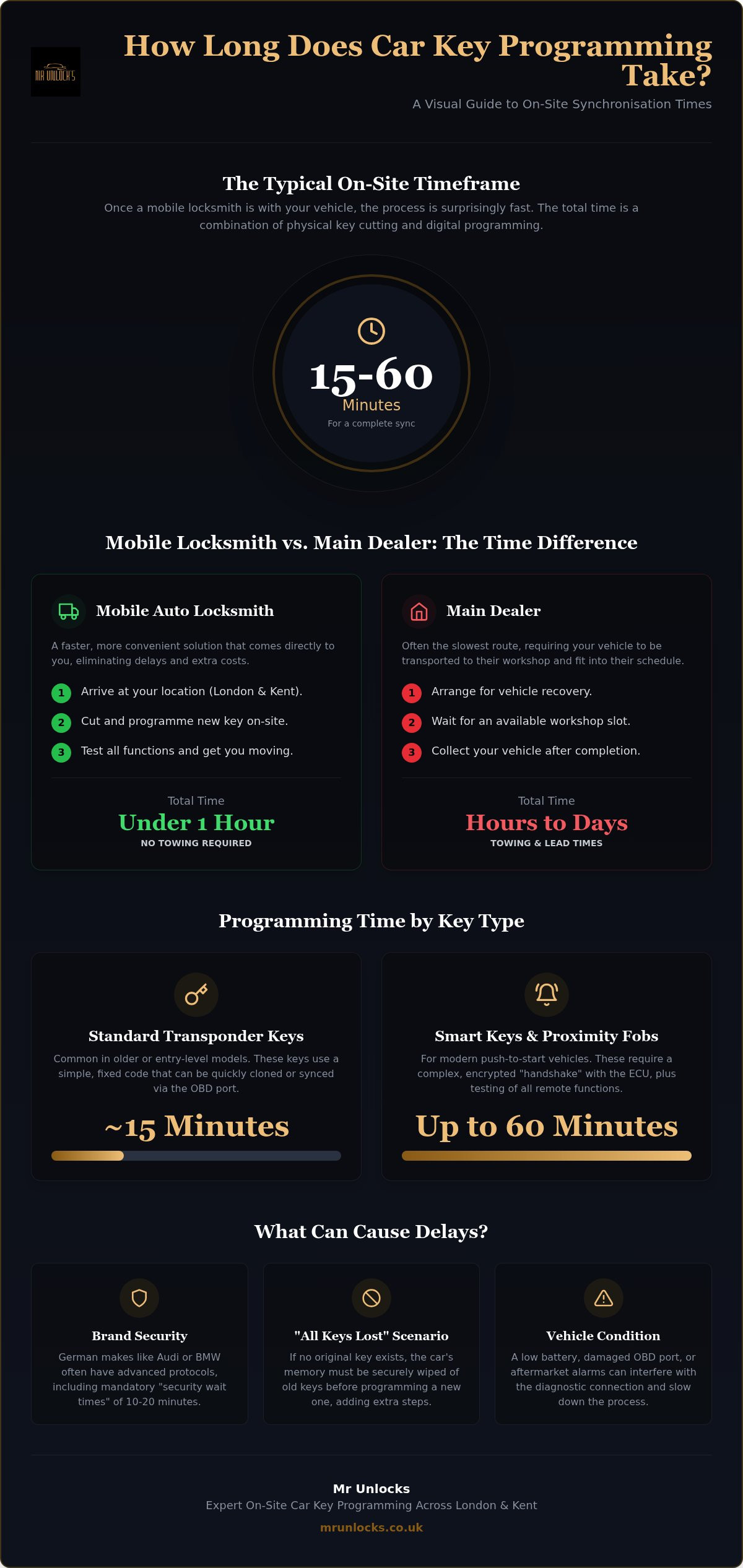
Getting a straight answer on timing helps reduce the panic of being locked out. Generally, most modern vehicle keys require between 15 and 60 minutes to programme once the technician arrives on-site. If you are wondering how long does car key programming take, you must consider that the process is split into two distinct stages. First, we use precision machinery to handle the physical key cutting. Second, we perform the digital synchronisation with the vehicle's immobiliser system. While the cutting takes only minutes, the software handshake is the part that demands expert attention.
The total duration depends heavily on whether you still have an original key. Duplicating a spare is a straightforward task because we can often clone the existing data. However, an "all keys lost" situation is more intensive. We have to access the car's computer, wipe the memory of the old, missing keys for security, and then introduce the new hardware as the primary device. This ensures that if your old keys were stolen, they will no longer start the engine. This extra security layer is vital, even if it adds a small amount of time to the visit.
The immobiliser is the silent guardian of your car's security. It's an electronic system that prevents the engine from running unless the correct code is received from the key. When we programme a new key, we are essentially teaching the vehicle to recognise a new digital signature. If the battery is low or there's a fault in the wiring, this handshake can take longer as we stabilise the connection to ensure a successful sync.
The 15-Minute Sync: Standard Transponder Keys
Older vehicles or entry-level models typically use basic Transponder keys. These chips send a simple, fixed code to the immobiliser when you turn the ignition. We connect directly to your vehicle's On-Board Diagnostics (OBD) port to perform the sync. If we are simply cloning a signal from your current spare, the software part of the job can be finished in as little as 15 minutes. It's a fast, non-destructive process that gets you back on the road with minimal fuss.
The 60-Minute Deep Sync: Smart Keys and Proximity Fobs
If you drive a modern car with a push-to-start button, the process is more involved. Smart keys and proximity fobs don't just send a one-way signal; they perform a complex "challenge and response" handshake with the Engine Control Unit (ECU). Because these systems have multiple layers of encryption, the programming can take up to 60 minutes. We don't just code the chip; we also have to test every feature. This includes checking the remote central locking, the door sensors, and any remote start functions. We ensure the new fob works perfectly across all frequencies before we leave your side in London or Kent.
Key Factors That Influence How Long the Process Takes
Several variables dictate exactly how long does car key programming take once a technician arrives at your location. It isn't just about the technician's skill; the vehicle's own internal architecture plays a massive role. From the physical state of the connection ports to the complexity of the 2026 security patches, every car presents a unique challenge. Understanding these factors helps manage your expectations whilst we work to get you back on the road.
The type of key also changes the timeline. A traditional bladed key with a basic transponder is often a quick fix. In contrast, a sophisticated smart fob with proximity sensors requires a deeper level of system integration. These fobs must be synchronised with multiple modules in the car, which naturally extends the duration of the visit.
Brand-Specific Security Protocols
German engineering is world-renowned for security, but this means brands like Audi, BMW, and the wider VAG group often require longer sync times. These vehicles use encrypted security codes that the car's computer must verify before allowing a new key to be added. In some cases, a "security wait time" is hardcoded into the vehicle's computer. This is a deliberate anti-theft feature that forces the system to stay idle for 10 or 20 minutes before accepting new data. Conversely, models from Ford or Vauxhall typically have more accessible protocols, allowing a mobile expert to complete the job much faster.
Hardware and Software Readiness
The condition of your car's On-Board Diagnostics (OBD) port is a common but overlooked factor. If the port is clogged with dust or has bent pins, the diagnostic tool cannot establish a stable link. Even a slightly low battery voltage can cause the programming to fail halfway through, as the car's modules require a constant power supply during the digital handshake. We always recommend choosing a specialist who uses high-grade diagnostic equipment rather than cheap, generic scanners.
Our mobile units are equipped with the latest 2026 software patches to ensure we can handle even the newest models on the road today. If you are stuck and need an immediate response, our team is ready to help across London and Kent right now. Having the right firmware on hand means we don't have to wait for dealer downloads, which cuts your total wait time significantly. We arrive prepared to bypass common software hurdles on-site.
Mobile Auto Locksmith vs. Main Dealer: Which is Faster?
Choosing between a main dealer and a mobile locksmith isn't just about the final invoice. It's a choice between getting back on the road today or losing access to your vehicle for a fortnight. When drivers ask how long does car key programming take, they often forget to factor in the "waiting list" time. A dealer might tell you the programming takes an hour, but they won't mention the two-week wait for an available slot in their workshop.
The total "down-time" for a driver using a dealership is significantly higher. You have the added stress and hidden cost of organising a recovery truck to tow your vehicle to their service centre. Once it arrives, your car often sits in a queue amongst dozens of others awaiting routine servicing. A mobile auto locksmith flips this model on its head by bringing the workshop to your driveway or the roadside, cutting the total time from crisis to completion by up to 90%.
The Reality of Dealership Waiting Lists
Main dealers typically operate on a "drop-off" basis. They expect you to leave your vehicle with them for the entire day, even for a task that takes under an hour. This inefficiency stems from their administrative lag. Dealers often act as middlemen; they have to request security codes from their manufacturer's headquarters, which can take days to arrive. We bypass this entire process. By using advanced on-site diagnostic tools, we can extract the necessary security data directly from your vehicle's computer in minutes, removing the need for external authorisation.
On-Road Efficiency in London and Kent
Our service is built for speed and local reliability. We organise our rapid response units to cover South East London boroughs like Greenwich, Lewisham, and Bromley with maximum efficiency. Instead of you coming to us, we arrive at your home or workplace fully equipped. We handle the key cutting, the transponder programming, and the final testing in a single visit. This "one-stop" approach is why we are the preferred choice for emergency situations. For a deeper look at how we manage these logistics, see our car key replacement London guide. We ensure that whilst the dealer is still checking their diary, you are already back behind the wheel.
Troubleshooting Delays: Why Some Car Keys Take Longer to Programme
Sometimes, the simple answer to how long does car key programming take is complicated by the vehicle's own history. If a previous "cowboy" locksmith attempted to force a code or used inferior tools, the car's computer might be in a "Security Lockout" state. This is a protective mode that prevents any new programming for a set period, often between 30 and 60 minutes. We cannot bypass this internal timer. We have to wait for the system to reset to ensure the new data is accepted safely and permanently.
Corrupted ECU data is another common hurdle that extends our time on-site. If your vehicle's brain has been damaged by a sudden battery failure or a botched repair, the standard digital handshake will fail. Similarly, aftermarket security systems or hidden immobilisers can block our diagnostic tools from communicating with the car. We must identify and temporarily bypass these "phantom" signals before we can successfully introduce a new key to the system. These technical obstacles turn a routine job into a complex recovery mission.
Dealing with Faulty Vehicle Electronics
A non-responsive OBD port can stall a job before it even starts. Dirt, corrosion, or even a blown fuse often cut the power to our diagnostic equipment. We perform a rapid "health check" on your security modules as soon as we arrive in London or Kent. This allows us to clear old error codes that might be clogging the system memory. Using professional-grade tools ensures we don't just guess at the problem. We see exactly what is blocking the synchronisation and fix it on the spot.
The Complexity of EEPROM and Soldering
For some older luxury vehicles or specific models where all keys are lost, we must perform EEPROM work. This involves removing a specific module from the dashboard and reading the data directly from the chip. It is a highly skilled task that requires precision soldering and deep technical knowledge. While this advanced technique takes 60 to 90 minutes, it saves you the massive expense of a dealer replacing the entire ECU. Most mobile locksmiths cannot do this roadside, but we carry the necessary equipment in our mobile units to handle it immediately.
If your car is being stubborn or a previous attempt by another firm has failed, contact Mr Unlocks for expert troubleshooting right now. We specialise in the difficult jobs that others walk away from, ensuring you aren't left stranded with a non-responsive vehicle.
Fast On-Site Car Key Programming Across London and Kent
Drivers in South East London and Kent face unique challenges, from heavy congestion to restrictive parking. When you are stuck and asking how long does car key programming take, you need a service that understands these local factors. We don't just provide a technical fix; we offer a rapid-response solution that meets you wherever you are. Whether you are stranded at a shopping centre in Bexley or on your driveway in Bromley, our mobile units are strategically positioned to reach you fast. We eliminate the need for a tow truck, saving you both time and the unnecessary stress of vehicle recovery.
Choosing a local mobile expert over a traditional garage removes the logistical nightmare of vehicle recovery. There is a specific peace of mind that comes from watching your new key being programmed right at your doorstep. You can see the precision of the cut and the successful sync with your immobiliser in real-time. This transparency builds trust and ensures you aren't left wondering if the job was done correctly. We operate with total visibility, testing every function before we consider the work complete. Our goal is to turn a stressful day into a minor inconvenience.
Local Expertise in South East London
Our team serves key hubs like Greenwich, Dartford, and Lewisham with dedicated mobile workshops. We know the local shortcuts and the parking complexities of these areas, which allows for a much faster on-site arrival than a generic national firm. This local knowledge is vital for maintaining our 24/7 emergency availability. For those needing specific technical details on our regional coverage, our car key programming London guide offers a comprehensive breakdown of our specialist mobile capabilities across the capital. We stay ready so you don't have to wait.
Booking Your Fast Key Sync Today
Getting a fast resolution starts with a quick phone call. To help us provide an accurate time and price estimate, please have your vehicle's make, model, and year ready. Knowing your exact location in Kent or London allows us to dispatch the nearest technician immediately. Our process is designed to be as frictionless as possible during a stressful situation. Request an emergency call-out, and we will handle the rest.
The simple process of requesting an emergency call-out means you aren't left waiting on hold for a service advisor. We provide direct communication with the technician who will be performing the work. This direct link allows us to troubleshoot any potential issues before we even arrive. Final reassurance is part of our service; we don't just hand over a key and leave. We walk you through the testing phase, ensuring the comfort access and any specific security features are fully operational. We stay on-site until the engine starts and you feel completely safe. Your mobility is our priority, and we are ready to act at any hour of the day or night.
Get Back Behind the Wheel Today
Don't let a lost or faulty key stall your week. While main dealers might keep you waiting for a fortnight, the actual answer to how long does car key programming take is often less than an hour when handled by a specialist. By choosing a mobile service, you bypass the hidden costs of towing and the frustration of garage queues. We arrive with the latest 2026 diagnostic tools to cut, programme, and test your new key right where you are parked.
Whether you are in the heart of Lewisham or a quiet street in Kent, our team is ready to respond. We specialise in non-destructive entry and provide a 24/7 emergency response, ensuring you never feel stranded for long. Our mobile units cover all of South East London and Kent, bringing the workshop directly to your location. Stop worrying about the dealership delay and get an expert on-site instead.
Frequently Asked Questions
Can I programme a car key myself to save time?
You cannot safely programme modern car keys without specialist diagnostic equipment. While some older models had manual sequences, 2026 security standards require a direct connection to the vehicle's computer. Attempting a DIY sync often triggers a security lockout, which actually increases the total time you are stranded. It's much faster to let a professional handle the software handshake using calibrated tools that guarantee a successful result without damaging your vehicle's electronics.
Do I need the original key to programme a new one?
You don't need an original key to get a new one programmed. We specialise in "all keys lost" situations where we extract the necessary security data directly from the vehicle's ECU. While having a working key makes the process slightly faster for cloning purposes, our mobile units carry the technology to create a fresh digital signature from scratch. We simply need proof of ownership and access to your car's OBD port to begin the work.
Will programming a new key erase my old ones?
Most programming sequences will erase any keys that aren't present during the sync. This is a vital security feature designed to protect you if your old keys were stolen or lost in a public place. When we introduce a new key to the system, we typically wipe the car's memory and re-learn only the keys you have in your hand. This ensures that no one else can use a missing key to start your engine.
Is it faster to get a key programmed at a dealership or a locksmith?
A mobile locksmith is almost always faster than a dealership. When you consider how long does car key programming take, you have to include the time spent waiting for a recovery truck and the days your car sits in a garage queue. We come to you in London or Kent and finish the job in a single visit. Most dealership appointments require a two-week lead time, whereas we offer 24/7 emergency response.
Why does my BMW/Mercedes key take longer to programme than a Ford?
German brands like BMW and Mercedes use much higher levels of encryption than Ford or Vauxhall. Their onboard computers often have built-in "security wait times" that force the technician to wait for 10 to 20 minutes before the system allows new data to be written. This is a deliberate anti-theft measure. While it adds a small amount of time to the visit, it provides superior protection for your vehicle's immobiliser system.
What happens if the locksmith cannot programme the key on-site?
It's rare for us to fail on-site, but if the vehicle's ECU is corrupted or the OBD port is faulty, we move into advanced troubleshooting. We carry specialised equipment for EEPROM work, allowing us to read data directly from the car's internal chips. If the hardware itself is physically broken, we will advise you on the next technical steps. Our goal is always a same-day resolution to keep you moving across South East London and Kent.
How much time should I set aside for a mobile locksmith visit?
Set aside approximately 45 to 60 minutes for the entire visit. This timeframe allows us to arrive at your location, cut the physical blade, and perform the digital synchronisation. Some simpler models take as little as 15 minutes, but we prefer to conduct thorough testing of the remote locking and transponder functions before we leave. We don't rush the process; we ensure every security feature works perfectly so you don't face a repeat failure.
Does the car battery need to be fully charged for programming?
Yes, a stable battery is critical for successful key programming. If the voltage drops during the digital handshake, the car's computer might crash or reject the new key code. We recommend ensuring your car hasn't been sitting with the lights on before we arrive. Our technicians carry battery stabilisers to maintain the correct voltage during the process, ensuring the software sync is completed without any interruptions or data corruption.


Comments